/
Qinghai, China, 2010
Monuments was photographed in the Tibetan region of China in the aftermath of an earthquake where the photographer worked as a photojournalist.
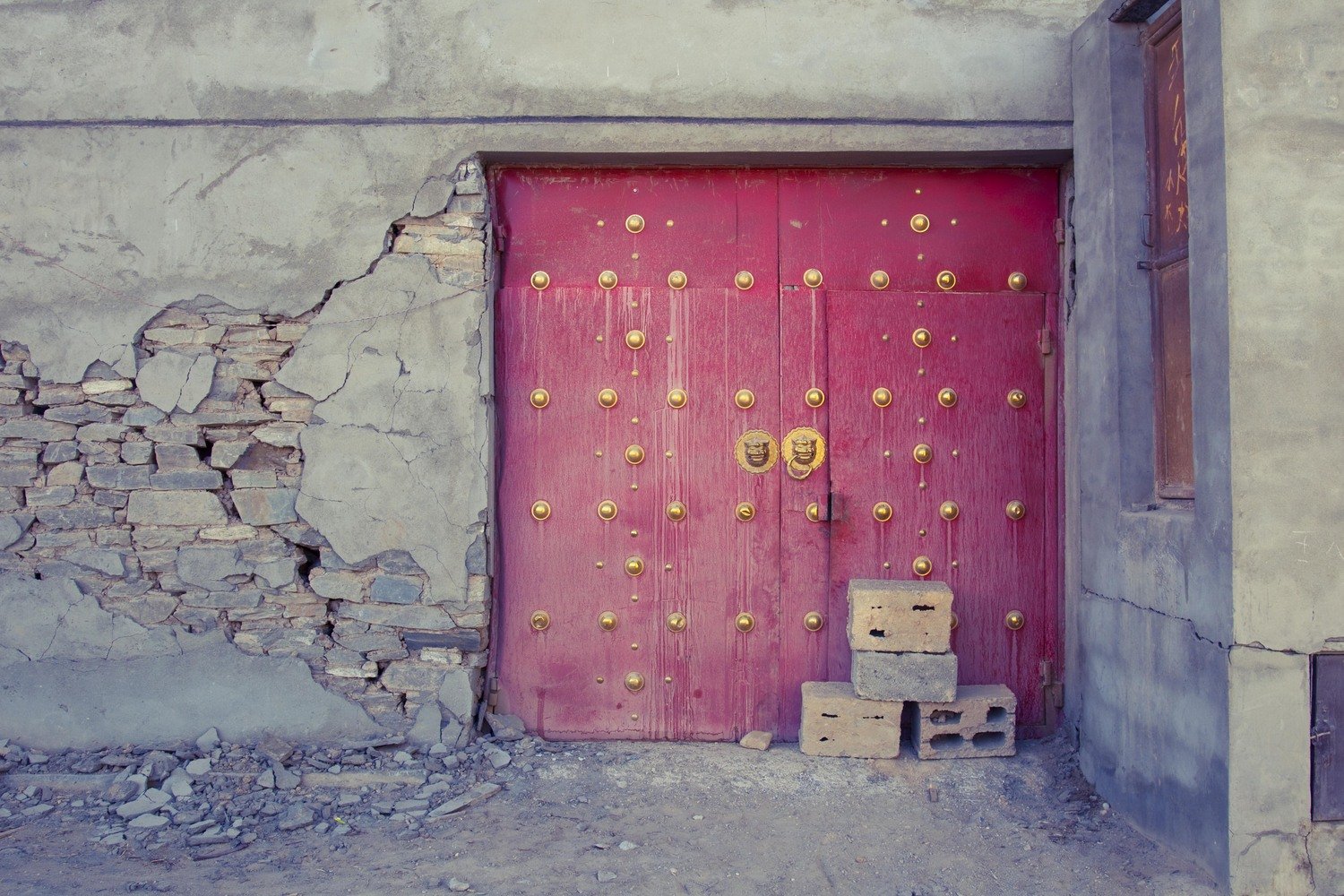
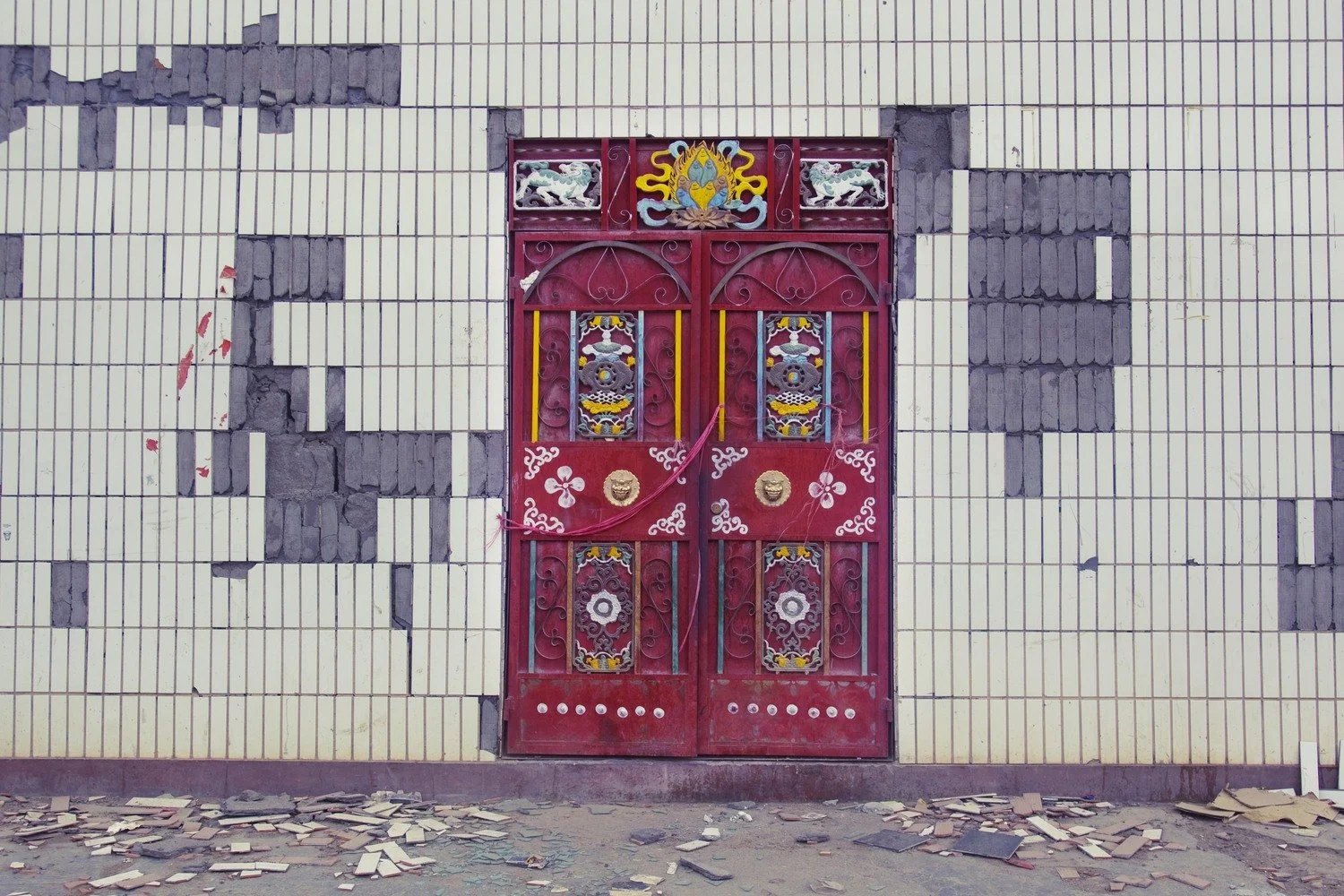
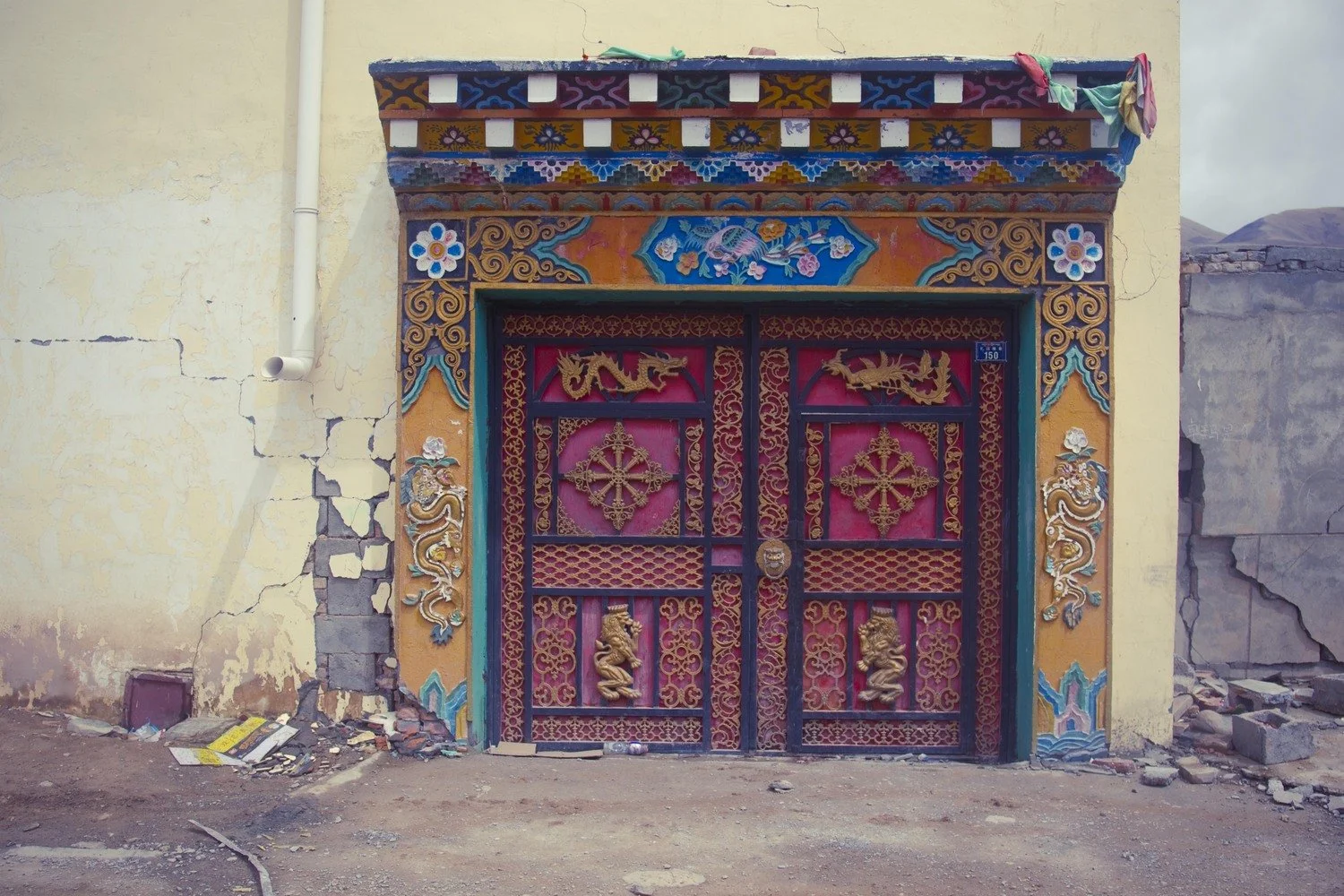
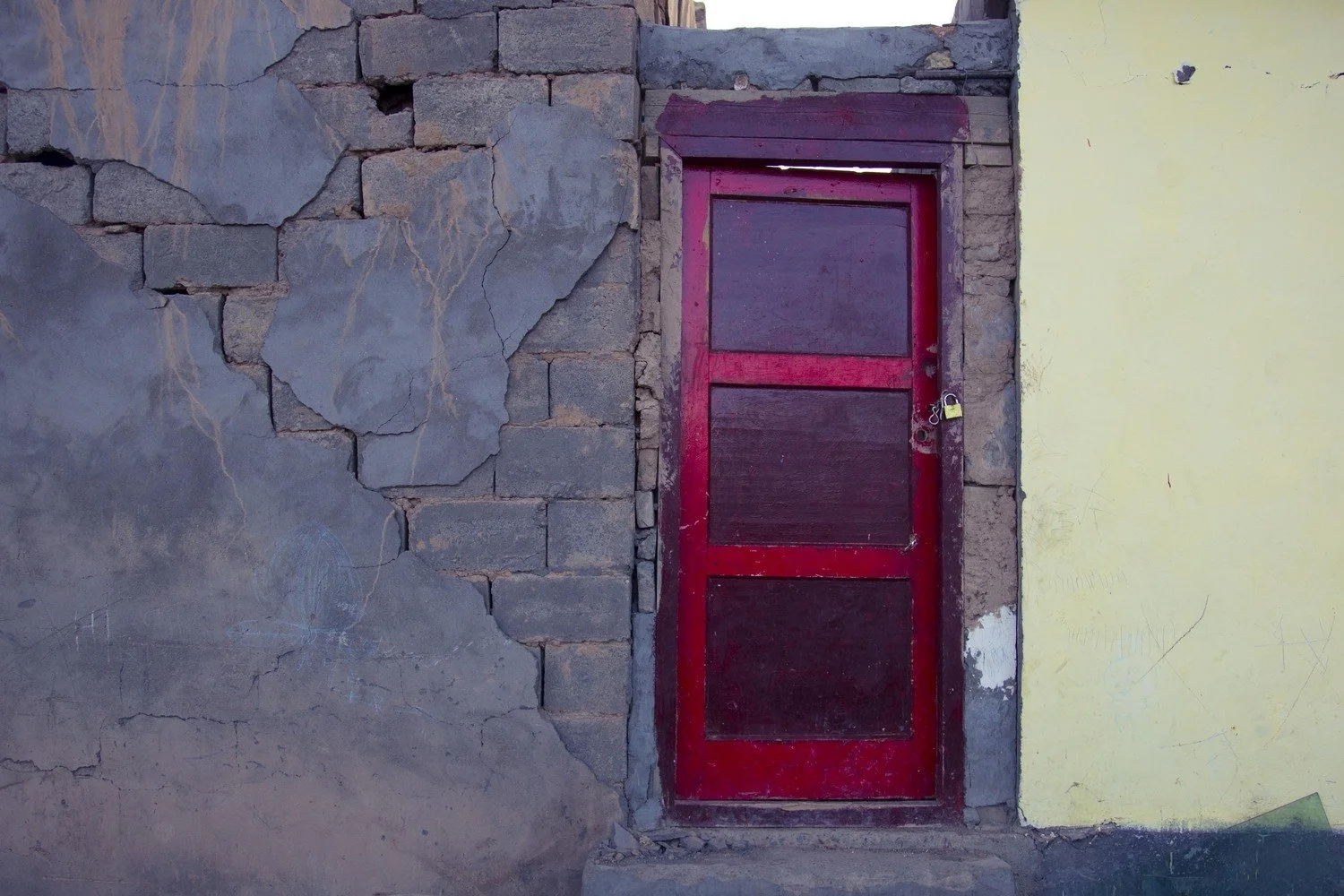
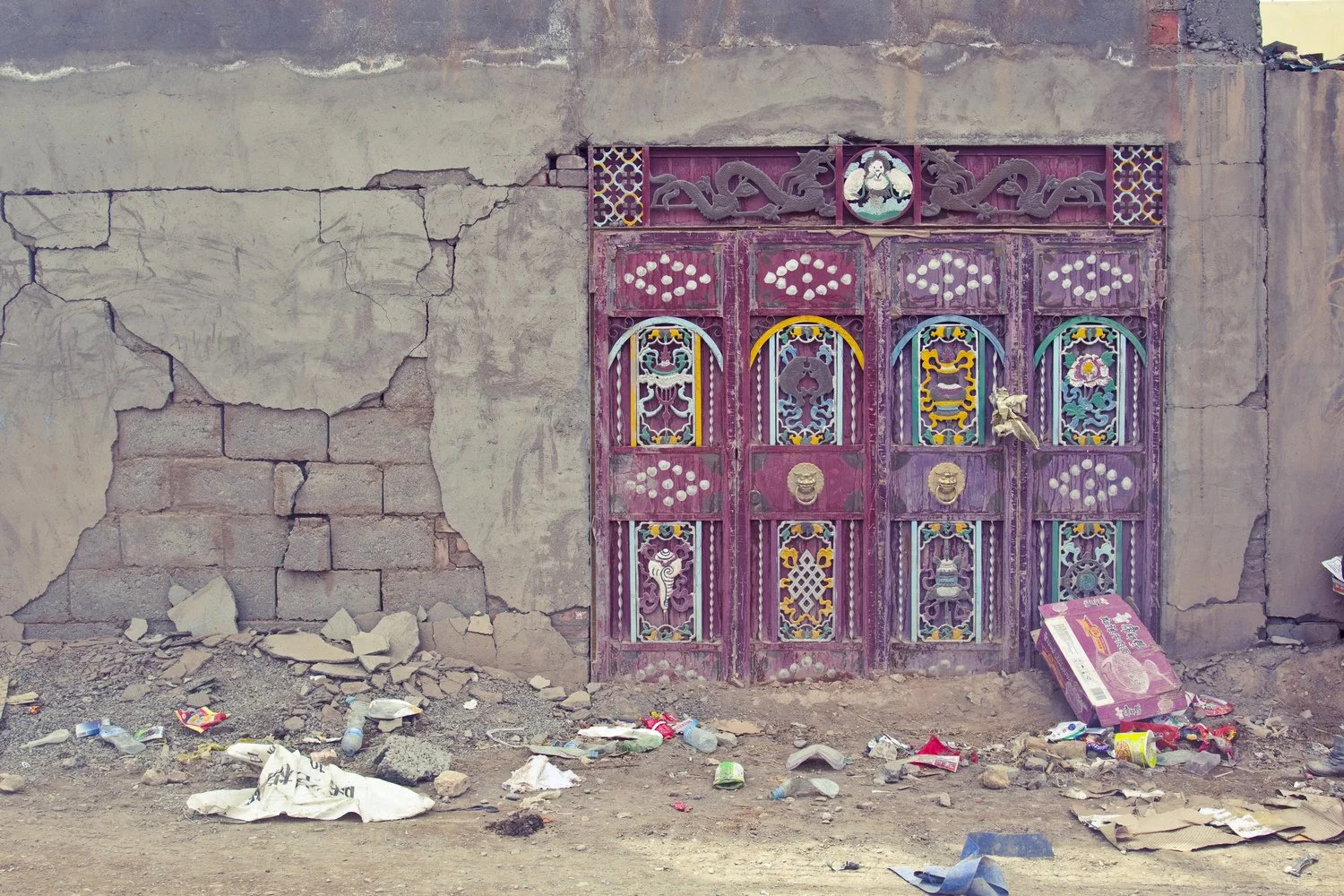
Most houses had been completely destroyed, yet in many homes the doors remained standing, carrying fragments of vivid colors, painted motifs, and traces of the Eight Auspicious Symbols, symbolizing both calamity and survival. the last surviving markers of a cultural and spiritual world.
In daily life, a door is something one passes through countless times—a simple, unthinking gesture. After the disaster, that act of entering and leaving is irrevocably altered; direction, time, and fate no longer have the same meaning.
These doors became witnesses of existence itself—where cultural color, lived experience, and the residue of belief continue to stand, holding on to the final shape of a community within the ruins.
Qinghai, China, 2010
Monuments was photographed in the Tibetan region of China in the aftermath of an earthquake where the photographer worked as a photojournalist.
Most houses had been completely destroyed, yet in many homes the doors remained standing, carrying fragments of vivid colors, painted motifs, and traces of the Eight Auspicious Symbols, symbolizing both calamity and survival. the last surviving markers of a cultural and spiritual world.
In daily life, a door is something one passes through countless times—a simple, unthinking gesture. After the disaster, that act of entering and leaving is irrevocably altered; direction, time, and fate no longer have the same meaning.
These doors became witnesses of existence itself—where cultural color, lived experience, and the residue of belief continue to stand, holding on to the final shape of a community within the ruins.
Qinghai, China, 2010